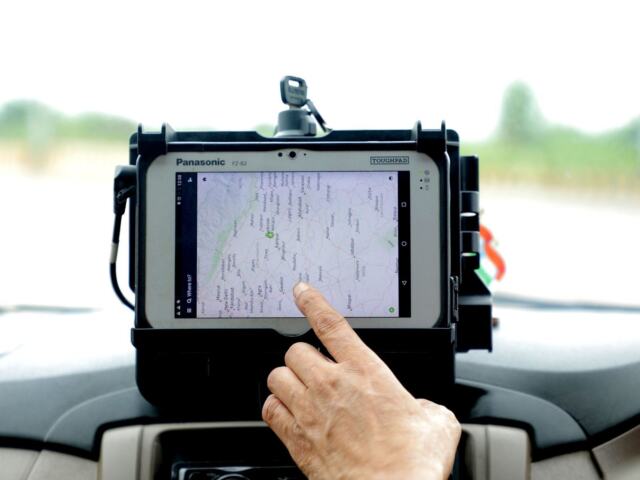
If your ELD stops working mid-trip, don’t panic. For eld malfunction what to do: note the fault, tell your carrier in writing within 24 hours, and rebuild your hours on paper logs.
| Item | Value |
|---|---|
| Written notice to the motor carrier | Within 24 hours |
| Days of duty status to reconstruct | Current 24-hour period plus the previous 7 consecutive days |
| Format for manual records | Graph-grid paper logs that comply with § 395.8 |
| Carrier’s time to correct the ELD | Within 8 days of discovery or driver notification, whichever occurs first |
| Deadline to ask for more repair time | Within 5 days after the driver notifies the carrier |
These figures come from the rule text at 49 CFR § 395.34 as published by Cornell’s Legal Information Institute. Rules can change, so check the source before you rely on them.
This guide is independent and educational. It is not legal advice and is not connected to any agency, carrier or device maker. If you are new to the technology, start with the basics of what is an electronic logging device.
What counts as an ELD malfunction?
The rule, titled “ELD malfunctions and data diagnostic events,” sets out what a driver must do in case of an ELD malfunction. This guide does not restate the technical definition, so check the regulation text for it.
A data diagnostic event is different. It means the device has flagged a data inconsistency, and it is handled under its own rule in the same section.
- Malfunction: the driver must note it, give written notice and keep manual records.
- Data diagnostic event: the driver must follow the motor carrier’s and ELD provider’s recommendations in resolving the data inconsistency.
The driver’s steps, in order
The rule lists what a driver must do. In plain terms, it comes down to a short sequence you can follow even when you are tired and parked at a truck stop.
- Note the malfunction. Write down what happened and when you noticed it.
- Give written notice. The regulation says to provide written notice to the motor carrier within 24 hours.
- Reconstruct your records. Rebuild the current 24-hour period and the previous 7 consecutive days.
- Use paper. Record duty status on graph-grid paper logs that comply with § 395.8.
The full wording is in the regulation. Read the paragraph itself rather than relying on a summary.
Reconstructing your logs
Reconstruction means filling in your duty status for the period the device can’t show. Use whatever you honestly remember and any records that back it up, such as fuel receipts, dispatch messages and bills of lading.
Keep the paper logs neat and complete. They are the records you will hand over if you are inspected, as covered in the next section.

What happens at a roadside inspection?
The rule addresses this directly. When a driver is inspected for hours of service compliance during an ELD malfunction, the driver must provide the authorized safety official the driver’s records of duty status manually kept.
That is why your notes and paper logs matter. For more on what officers ask for, see this guide to an eld roadside inspection.
- Keep your paper logs where you can reach them quickly.
- Keep a copy of the written notice you gave your carrier.
- Be ready to say when the fault began.
Handling a data diagnostic event
Sometimes the device keeps working but flags a problem with its own data. The rule says that when an ELD indicates a data inconsistency that generates a data diagnostic event, the driver must follow the motor carrier’s and ELD provider’s recommendations in resolving it.
In practice, that means you should not ignore the warning icon or message. Read what the device is telling you, then contact your carrier or the provider’s support line for guidance.
- Take a photo or screenshot of the message if the device allows it.
- Write down the time, your location and what you were doing.
- Ask your carrier whether the event needs to be treated as a full malfunction.
- Keep going on the device only as your carrier’s instructions allow.
If the warning clears on its own, still mention it to your carrier. A pattern of repeated events can point to a loose connection or a failing unit that is worth fixing before it turns into a full malfunction.
Practical habits that make a malfunction easier
Most of the pain of a malfunction comes from missing records. A few habits before anything goes wrong will make the reconstruction step quick and believable.
- Carry blank paper logs. Keep a pad of graph-grid logs in the cab so you never have to improvise.
- Keep the device’s instruction sheet and the provider’s support number in the truck.
- Save receipts for fuel, tolls, scales and meals, since they help back up your timeline.
- Know how to reach your dispatcher or safety department after hours.
- Report small glitches early, before they become a failure.
None of this replaces what the regulation requires. It simply helps you meet it without stress when a device fails at a bad moment.
What your carrier has to do
Your carrier carries a share of the duty. Under the rule, once it learns of a malfunction it must act to correct it within 8 days of discovery or of your notification, whichever occurs first.
If more time is needed, the carrier must notify the FMCSA Division Administrator for the State of its principal place of business. That notice is due within 5 days after the driver notifies the carrier.
This is a reason to send your notice promptly and keep proof of when you sent it. It starts the carrier’s clock. Day-to-day device habits, which help you spot problems early, are covered in how to use an eld.
Frequently asked questions
Do I have to stop driving when my ELD fails?
Show answer
The rule as quoted above does not tell you to stop. It tells you to note the fault, notify the carrier, reconstruct your records and keep paper logs. Follow your carrier’s own policy as well.
Does the notice to my carrier have to be written?
Show answer
Yes. A text message or email that leaves a timestamped trail is a sensible way to do it, but check your carrier’s own policy on how it wants the notice delivered.
How far back do I rebuild my logs?
Show answer
The rule says the current 24-hour period and the previous 7 consecutive days, recorded on graph-grid paper logs that comply with § 395.8.
How long does my carrier have to fix the device?
Show answer
The rule gives the carrier 8 days from discovery or from your notification, whichever occurs first. An extension request is due within 5 days after you notify the carrier.