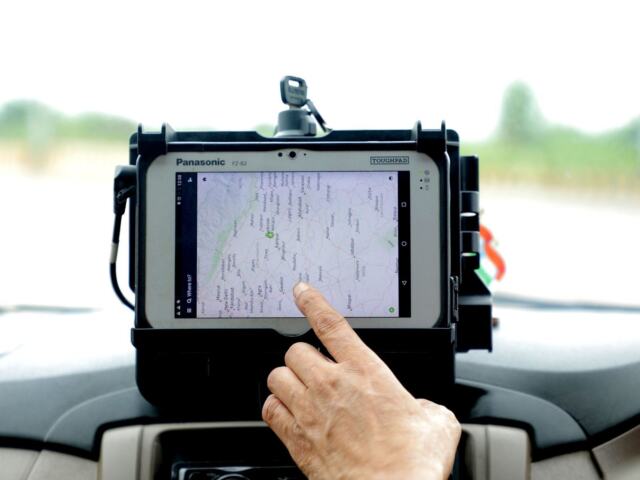
Wondering about ELD vs paper logbook for your truck? For most drivers who must keep records of duty status, the electronic device is the rule, and paper survives only in narrow exceptions you should check first.
New to the topic? Start with what is an electronic logging device for the basics, then come back for the comparison.
| Item | Value |
|---|---|
| Paper logs allowed under the limited exception | Not more than 8 days out of every 30-day period |
| Prior days a driver must be able to show | Previous 7 days of records of duty status |
| ELD data retention by the motor carrier | Six months |
| Supporting documents a carrier keeps | Up to eight per 24-hour period on duty |
| Vehicle-age exception | Vehicles manufactured before 2000 |
These figures come from an FAQ text that reproduces FMCSA guidance from an older general FAQ edition. Rules and guidance can change, so check the source and the current regulation before you rely on them.
What each system actually is
A paper logbook is a driver’s handwritten record of duty status. The driver draws or writes each change between driving, on-duty, sleeper berth and off-duty time, and fills in the related details by hand.
An electronic logging device (ELD) is hardware and software tied to the truck’s engine. It records driving time automatically, so the driver confirms and annotates the record instead of building it from scratch.
Both aim at the same thing: showing that a driver stayed within hours-of-service limits. The difference is how the record is created, how easily it can be changed, and how it is handed to an inspector.
ELD vs paper logbook: key differences at a glance
- Recording: paper relies on the driver’s memory and discipline; an ELD captures driving time as the vehicle moves.
- Editing: paper can be altered quietly; ELD edits are tracked, and the original records are kept after edits and stay accessible to the driver, per the FAQ text.
- Inspection: paper is shown by hand; an ELD can produce a display or transfer the data to the officer.
- Storage: paper piles up in the cab and the office; ELD data is stored electronically, with the carrier required to retain it for six months.
- Cost: paper logs are cheap to buy; an ELD means buying a device.
Editing is where the two differ most. Because an ELD preserves what was originally recorded, a later change leaves a visible trail.
Day-to-day experience for the driver
On paper, the work happens at every stop. You note the change of status, the location and the time, and you have to keep the sheet legible, complete and with you in the cab. A missed entry is easy to make after a long shift, and it is hard to fix later without it looking like a correction.
With an ELD, most of that effort moves into the device. Because the device records driving time for you, your job is mainly to select the right duty status when you are not driving, add notes where needed, and review your record before certifying it.
The trade-off is dependence on technology. A device can lose power or malfunction, and then you need a plan for recording your hours by hand. Carrying blank paper sheets is a sensible backup, and the FAQ text lists a supply of blank driver’s records of duty status among the items that should accompany a device.
For fleets, the office view is different too. Electronic records can be reviewed without waiting for envelopes of sheets, while paper has to be collected, checked by hand and filed. That extra handling is a hidden cost that rarely shows up when people compare the price of a pad of paper with a subscription.
When paper logs are still allowed
The ELD rule is not universal. According to the FAQ text, the limited exceptions include drivers who use paper records of duty status for not more than 8 days out of every 30-day period.
The same text lists drivers who operate under the short-haul exceptions, who may keep using timecards and are not required to keep records of duty status.
Some drivers are exempt from the device but not from logging itself. The FAQ states they are “still bound by the RODS requirements in 49 CFR 395 and must prepare logs on paper, using an Automatic On-Board Recording Device (AOBRD), or with a logging software program when required.” One example it gives is drivers of vehicles manufactured before 2000.

What the driver must be able to show
Whichever system you use, the FAQ says drivers can present their previous 7 days of records in several ways:
- Paper records
- A printout from an electronic logging device
- A display from a device installed with logging software and electronic signature capabilities
- Records available by entering them into an ELD
- Continued use of a grandfathered automatic on-board recording device
So paper still appears even for ELD users, for example as a printout. For what happens at the roadside, see our guide to eld roadside inspection.
Paperwork, retention and duty codes
Going electronic does not remove every document. The FAQ says motor carriers must keep up to eight supporting documents for every 24-hour period that a driver is on duty, such as the records that back up the log.
For retention, the FAQ is direct: “A motor carrier must retain ELD record of duty status (RODS) data and back-up data for six months.” Paper logs bring their own storage burden, because the carrier still has to keep and find the sheets.
Duty status entries mean the same thing on both systems, though an ELD uses fixed codes and prompts. Our explainer on eld duty status codes covers the categories.
Choosing between them in practice
For most regulated drivers the choice is made for you: if you are covered by the rule and no exception applies, you need an ELD. Paper is a fallback or a narrow exception, not a free option.
Before you rely on paper, run through this check:
- Confirm whether your operation falls under an exception, such as short-haul or the limited paper-days exception.
- Count your paper days across a 30-day window, since the limit is measured over that span.
- Check the age of the vehicle against the pre-2000 exception.
- Read the current regulation text, because the FAQ material here is older guidance.
This site is independent and educational. It does not give individual compliance advice, so confirm your own situation with the regulator or a qualified professional.
Frequently asked questions
Can I use paper logs instead of an ELD?
Show answer
Only if an exception applies. The FAQ text lists limited cases, including paper use for not more than 8 days out of every 30-day period.
Do short-haul drivers need an ELD?
Show answer
According to the FAQ text, drivers who operate under the short-haul exceptions may continue using timecards. They are not required to keep records of duty status and will not be required to use ELDs.
How long must ELD data be kept?
Show answer
The FAQ says a motor carrier must retain ELD record of duty status data and back-up data for six months.
Are original ELD records kept after an edit?
Show answer
Yes. The FAQ answers that the original ELD records are retained after edits are made and remain accessible to the driver.